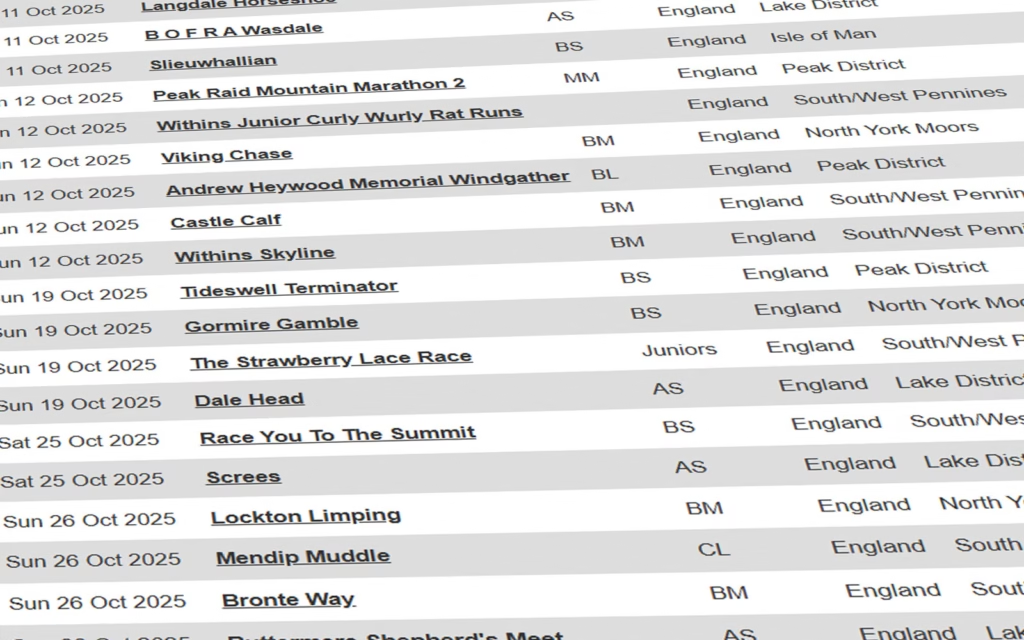
If you’re new to fell running or just browsing race listings, you might have noticed races described with two-letter codes like BM, AL, or CS. These are part of the FRA’s race classification system, designed to give runners a quick idea of a race’s difficulty, length, and terrain.
The first letter of the two-letter code is known as the ‘ascent category’ and refers to the amount of climb per-kilometre and the terrain you’ll be running on.
- A: The toughest category – These races must average not less than 50 metres climb per kilometre with not have more than 20% of the race distance on road.
- B: Moderate difficulty – These races should average not less than 25 metres climb per kilometre with not have more than 30% of the race distance on road.
- C: The least severe – These races should average not less than 20 metres climb per kilometre, with not have more than 40% of the race distance on road. They should contain some genuine fell terrain.
The second letter of the code is known as the ‘distance category’ and simply refers to the overall race distance:
- S: For the shortest races which are up-to a distance of 10 km (6.2 miles)
- M: For Medium races with a distance of between 10 and 20 km (6.2 to 12.4 miles)
- L: For the Longest which are over 20 km (12.4 miles)
Other categories you’ll occasionally see are:
- MM: This stands for Mountain Marathon. This is a different category of event which may require self-sufficiency (with runners carrying all their gear, including overnight kit), navigation skills (with routes not marked and map reading is essential), and may include overnight camping between stages. This is a unique race format governed by additional rules.
- O: Is a mountain orienteering challenge requiring strong navigation skills, self-sufficiency, and good mountain judgment.
- Juniors: This type of race is often for under 16 years of age
Other abbreviations you will see on the FRA race listings page are required skills:
ER – experience is required
LK – local knowledge is an advantage
NS – navigational skills are required
PM – the course is partially marked
Understanding these abbreviations gives you a very quick way to figure out if the race might be suitable for you. For example, an CS race is going to be under 10km with relatively little ascent – a reasonably easy one by most fell runner’s standards. Whereas an AL race will potentially be a steep and long off-road race.
Here are some examples of races with their FRA classification and required skills:
Cringle Hill in November on the Isle of Mann is a CS race with PM skills. It’s a 3km race with 75m of ascent and a course which is at least partially marked. Nav skills not required so it would probably be safe to assume you could just turn up and you’d find your way
Viking Chase in October in the North York Moors is a BM race with required skills of PM and LK. It’s a 12km distance with 572m of overall ascent – that’s a lot of ascent for the distance, and even through the PM says the course is at least partially marked. And with the LK requirement, it might be one that is particularly difficult in bad weather
The Langdale Horseshoe in October in the Lake District is an AL race with required skills of ER, PM, LK, and NS. That’s 21km with 1450m of overall ascent. You’ll need to be able to navigate with a physical map and compass and you should already have experience of races similar to this. In other words, not a race to approach lightly.

Good One