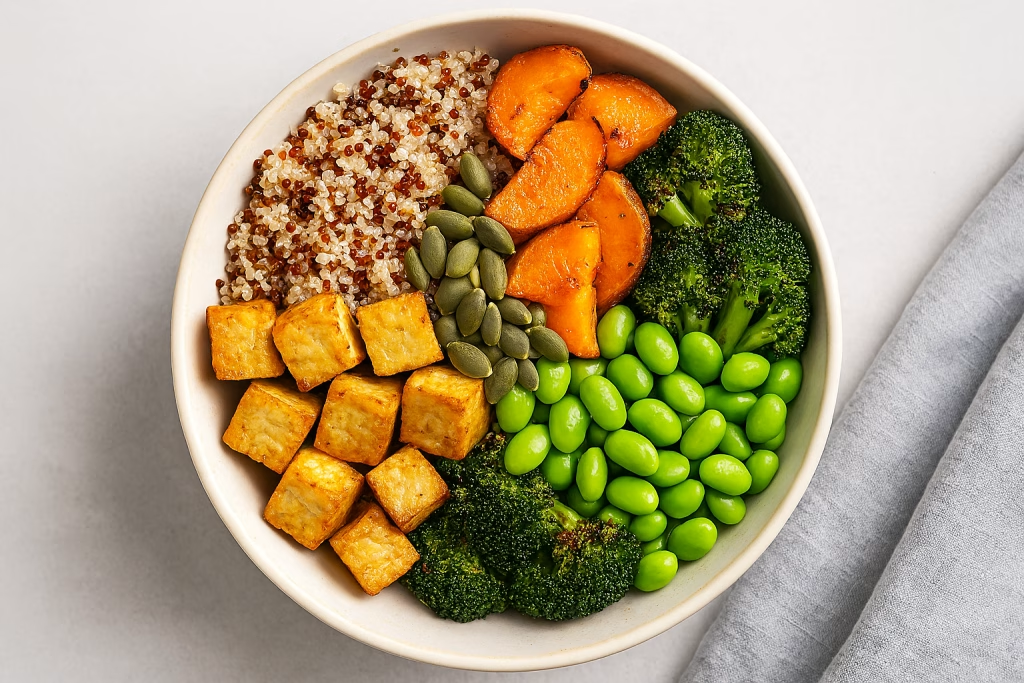
The subject of protein can seem complicated for several reasons, primarily because there’s are whole industries focused on telling you that you need to eat their particular product to get enough or the ‘right’ type of protein (such as the meat industry or the snacks industry). Therefore, I’ve created this page to guide you through everything you need to know in order to understand protein – what protein does, how much you likely need, and easy ways to get a little more each day. There’s also an interactive table below showing high-protein foods by portion size for quick reference.
What is protein?
Protein is made up of amino acids—your body’s basic building blocks. You use it to repair tissues (including muscle), make enzymes and hormones, support your skin and hair, and keep your immune system in good nick. Because your body can’t make some amino acids on its own (the “essential” ones), you need to get them from food.
How much protein do you need?
For most healthy adults in the UK, a good rule of thumb is 0.75 g of protein per kilogram of body weight per day.
- Example: 60 kg → ~45 g per day; 75 kg → ~56 g per day.
- Spreading protein evenly across breakfast, lunch and dinner helps your body use it well.
Your needs can be different if you’re older or very active—these groups may benefit from a bit more and from evenly distributing protein across meals—but the 0.75 g/kg baseline is a solid starting point for most adults.
How much daily protein do I need – calculator
Notes: This calculator uses the UK Reference Nutrient Intake of 0.75 g/kg/day for adults. Some people—e.g., older adults or those doing regular intense training—may benefit from a higher daily protein target; if that’s you, open Advanced and slide the multiplier up. For individual advice, speak to a registered health professional
What are some good high-proteins choices?
You’ll find plenty of higher‑protein choices in an average supermarket:
- Soy foods: tofu, tempeh, edamame (all complete plant proteins).
- Pulses: lentils, chickpeas, black/kidney beans—budget‑friendly and fibre‑rich.
- Quorn (mycoprotein): a high‑protein, high‑fibre meat alternative.
- Dairy & eggs: Greek yogurt, cottage cheese, milk and eggs are reliable staples.
- Nuts & seeds: almonds, pistachios, peanuts, pumpkin/hemp/chia/flax—a small handful adds useful grams (and crunch).
- Whole grains & pseudocereals: quinoa and buckwheat bring bonus protein compared with white rice or refined pasta.
Simple swaps to increase your protein
Pick one or two of these to nudge your daily total up without overhauling your meals:
- Swap regular yogurt for Greek yogurt at breakfast (a typical 170 g pot gives ~16–18 g protein).
- Add edamame to salads, stir‑fries or grain bowls (about 18.5 g per cooked cup / 155 g).
- Use firm tofu or tempeh as your “main” in curries or fajitas (roughly 15–17 g protein per 100 g for firm tofu; ~20 g per 100 g for tempeh).
- Beans on toast as a speedy lunch: a 200 g tin of baked beans delivers around 9–10 g protein (add a slice of wholegrain toast for extra fibre)
- Choose cottage cheese for a quick snack or jacket‑potato topping (≈11 g per 100 g).
- Keep Quorn™ pieces in the freezer: they cook in minutes and provide ~14 g per 100 g
- Stir 30 g pumpkin seeds into porridge or salads for an easy ~7 g extra.
- Drink your protein when you’re on the go: 250 ml semi‑skimmed milk adds ~8–9 g alongside your coffee or cereal.
- Upgrade pasta nights by adding a can of lentils or chickpeas (pulses provide ~7–9 g per 100 g cooked; your portion adds up).
- Mix grains: try quinoa instead of white rice—one cooked cup (185 g) gives ~8 g protein plus helpful minerals.
Smart portion pointers
- A simple guide is a palm‑sized protein food at each meal (e.g., a tofu/tempeh/Quorn portion, or two eggs). UK guides also class 2 eggs as one portion, and a 200 g baked‑bean tin or 3 heaped tbsp of beans as a portion of pulses.
- Cheese is handy but watch saturated fat and salt—especially with salty cheeses like halloumi. Keep portions modest (e.g., ~30 g hard cheese).
Putting it all together
- Work out your daily target: body weight (kg) × 0.75 = grams of protein per day. Spread that across meals and snacks.
- Build each plate around a protein: tofu/tempeh/Quorn, beans/lentils, eggs or dairy—then add plenty of veg, wholegrains, nuts or seeds.
- Mix your plant proteins over the day to cover all essential amino acids (or lean on soy, quinoa and Quorn for complete options).
25 protein-rich foods by portion size – interactive table
| Rank | Food | Category | Typical Portion | Protein | Notes |
|---|---|---|---|---|---|
| 1 | Seitan (vital wheat gluten) | Meat alternative (wheat) | 100 g | 24.7g | Very high protein; not suitable for gluten-free diets. |
| 2 | Tofu, firm | Soy (legume) | 150 g | 23.7g | Protein varies by firmness and brand. |
| 3 | Tempeh | Soy (fermented) | 100 g | 20.3g | Fermented soy; nutty flavour and firm texture. |
| 4 | Paneer (fresh Indian cheese) | Dairy | 100 g | 19g | Protein varies 18–20 g/100 g depending on fat and brand. |
| 5 | Edamame, cooked & shelled | Soy (legume) | 1 cup (155 g) | 18.5g | Complete plant protein; great in salads and bowls. |
| 6 | Cottage cheese | Dairy | 150 g | 18g | Choose reduced-salt varieties where possible. |
| 7 | Greek yogurt, plain (nonfat) | Dairy | 1 pot (170 g) | 17g | Strained yogurt; higher in protein than regular yogurt. |
| 8 | Kidney beans, cooked | Pulse/legume | 150 g | 14g | Great in chillis, stews and salads. |
| 9 | Quorn pieces (mycoprotein) | Meat alternative (mycoprotein) | 100 g | 14g | High in fibre and protein; check egg content if needed. |
| 10 | Eggs | Egg | 2 eggs | 14g | Two-egg portion; versatile complete protein. |
| 11 | Black beans, cooked | Pulse/legume | 150 g | 13.5g | Rich in fibre and minerals; pair with grains. |
| 12 | Lentils, cooked | Pulse/legume | 150 g | 11.4g | Cook quickly; great in soups and dahls. |
| 13 | Chickpeas, cooked | Pulse/legume | 150 g | 10.8g | Use in curries, salads and hummus. |
| 14 | Baked beans (in tomato sauce) | Pulse/legume (tinned) | 1 small tin (200 g) | 9.7g | Convenient; look for reduced-sugar/salt. |
| 15 | Hemp hearts (hulled hemp seed) | Seeds | 30 g | 9g | Approx. 30% protein; sprinkle on yogurt or salads. |
| 16 | Milk, semi‑skimmed | Dairy | 250 ml | 8.5g | Complete dairy protein; great in shakes or porridge. |
| 17 | Quinoa, cooked | Pseudocereal | 1 cup (185 g) | 8.1g | Complete plant protein; use as a grain base. |
| 18 | Peanut butter | Nut butter | 2 tbsp (32 g) | 8g | Energy-dense; choose no‑added‑sugar/salt. |
| 19 | Cheddar cheese | Dairy (hard cheese) | 30 g | 7.6g | Mind saturated fat and salt; strong flavour helps smaller portions. |
| 20 | Pumpkin seeds | Seeds | 30 g | 7.3g | Crunchy topping for salads, oats and yogurt. |
| 21 | Peanuts, dry roasted | Nuts | 30 g | 7g | Budget-friendly snack; allergen for some. |
| 22 | Halloumi | Dairy (semi‑hard cheese) | 30 g | 6.6g | Grills well; watch sodium and saturated fat. |
| 23 | Almonds | Nuts | 30 g | 6.3g | Handy snack; also great chopped over dishes. |
| 24 | Pistachios | Nuts | 30 g | 6.2g | Good as a snack or crushed over salads. |
| 25 | Buckwheat, cooked (groats) | Pseudocereal | 1 cup (168–170 g) | 5.7g | Naturally gluten‑free grain alternative. |
Wondering why there are no animal protein sources listed or talked about on this page?
All animal protein ultimately comes from plants and microbes that make amino acids; plant‑eating animals get it first‑hand, and meat‑eating animals just get it second‑hand.
- Herbivores eat plants, and in ruminants (e.g., cows, sheep) the rumen microbes also make “microbial protein” the animal digests.
- Omnivores like pigs and chickens are usually fed plant‑based feeds (e.g., soybean meal), so their protein still traces back to plants.
- In water, fish sit in food webs that start with algae (phytoplankton), so their protein also begins with plant/microbial producers.
Cut the middle-man out by going straight for the protein source

0 Comments Leave a comment