Please note this is a ‘Beta’ version of the table which I’ll endeavour to update on an ongoing basis
This is a decision‑friendly reference to food additives (E‑numbers), bringing together regulatory status, safety benchmarks, typical uses, and human‑relevant concerns including a concise column on possible microbiome effects with the type of evidence (e.g., Human RCT, ex vivo, animal). It’s arranged alphabetically by E‑number so you can scan quickly or filter by category (colour, emulsifier, preservative, sweetener, etc.) or use the search functionality. It’s as comprehensive as I could make it but I’ll endeavour to update when I find newer data. There is a glossary of terms at the bottom of this page
Last updated 02/02/26
| E-number | Common name | Category/Function | ADI (mg/kg bw/day) | Regulatory status (EU/US) | Key health concerns | Observational cohort findings | Typical foods | Notes | Microbiome impact (summary & evidence level) |
|---|---|---|---|---|---|---|---|---|---|
| E102 | Tartrazine | Colour (Yellow) | EFSA 7.5; JECFA 10 | EU permitted with warning label; US permitted (FD&C Yellow No.5) | Rare intolerance/allergic-type reactions; hyperactivity signal in mixtures | N/A (signals from Southampton study mixtures) | Soft drinks, candies, ice cream, jams, cake mixes | EU label: ‘may have an adverse effect on activity and attention in children’ | No clear human evidence of microbiome impact identified; data limited. Primary safety assessments focus on other endpoints. |
| E104 | Quinoline Yellow | Colour (Yellow/Greenish) | EFSA 0.5 (2015 re-eval old) | EU permitted with warning label; US not FD&C | Hyperactivity signal in mixtures; rare hypersensitivity | Sweets, soft drinks | EU warning label required | No clear human microbiome evidence; data limited. | |
| E110 | Sunset Yellow FCF | Colour (Orange) | EFSA 4; JECFA 4 | EU permitted with warning label; US permitted (FD&C Yellow No.6) | Hypersensitivity in susceptible individuals; historic hyperactivity signal in mixtures | N/A (signals from Southampton study mixtures) | Orange sodas, marzipan, packet soups, sweets | EU label warning applies | No clear human evidence of microbiome impact identified; data limited. Primary safety assessments focus on other endpoints. |
| E120 | Cochineal / Carmine | Colour (Red) | EFSA 5 | EU permitted; US permitted | Rare severe allergy (anaphylaxis) | Yogurts, pink ice cream, drinks, confectionery | Animal-derived (insect); not vegan/vegetarian | No clear human evidence of microbiome impact identified; data limited. Primary safety assessments focus on other endpoints. | |
| E122 | Azorubine / Carmoisine | Colour (Red) | EFSA/JECFA 4 | EU permitted with warning label; US not approved | Possible hypersensitivity; hyperactivity signal in mixtures | Yogurts, dessert toppings, bakery | EU label warning applies | No clear human evidence of microbiome impact identified; data limited. Primary safety assessments focus on other endpoints. | |
| E123 | Amaranth | Colour (Red) | EFSA 0.8; JECFA 0-2.5 | EU permitted; US banned | Historical carcinogenicity concerns; controversial | Wine, fish roe (where permitted) | Banned in some countries (US, Norway, Russia) | No clear human evidence of microbiome impact identified; data limited. Primary safety assessments focus on other endpoints. | |
| E124 | Ponceau 4R | Colour (Red) | EFSA 0.7; JECFA 4 | EU permitted with warning; US not approved | Hypersensitivity in some; hyperactivity signal | Fruit fillings, jellies, pie mixes | EU label warning applies | No clear human evidence of microbiome impact identified; data limited. Primary safety assessments focus on other endpoints. | |
| E127 | Erythrosine | Colour (Red) | EFSA 0.1; JECFA 0-0.1 | EU permitted; US restricted (FD&C Red No.3 for some uses) | Thyroid effects at high dose in animals | Candied cherries, cake decorations | Limited microbiome data. | ||
| E129 | Allura Red AC | Colour (Red) | EFSA/JECFA 7 | EU permitted with warning; US permitted (Red 40) | Rare intolerance; ongoing debate | Soft drinks, snacks, sauces, confectionery | EU label warning applies | No clear human evidence of microbiome impact identified; data limited. Primary safety assessments focus on other endpoints. | |
| E131 | Patent Blue V | Colour (Blue) | EFSA 0.5 | EU permitted; US not approved | Rare allergic reactions | Confectionery, beverages | No clear human microbiome evidence. | ||
| E132 | Indigotine / Indigo Carmine | Colour (Blue) | EFSA/JECFA 5 | Permitted | Occasional intolerance (nausea, rashes) | Ice cream, candies, biscuits | Spec limits tightened (2023 follow‑up) | No clear human evidence of microbiome impact identified; data limited. Primary safety assessments focus on other endpoints. | |
| E133 | Brilliant Blue FCF | Colour (Blue) | EFSA/JECFA 6 | Permitted | Rare sensitivities reported | Ice cream, beverages, icings | EU/US widely used | No clear human evidence of microbiome impact identified; data limited. Primary safety assessments focus on other endpoints. | |
| E140 | Chlorophylls and chlorophyllins | Colour (Green) | See EFSA opinion | Permitted | Generally safe | Oils, confectionery | Neutral; limited data. | ||
| E141 | Copper complexes of chlorophylls | Colour (Green) | See EFSA | Permitted | Copper intake considerations | Mint sweets, canned peas | No human microbiome evidence. | ||
| E142 | Green S | Colour (Green) | EFSA 5 | EU permitted; US not approved | Rare hypersensitivity | Desserts, peas | No human microbiome evidence. | ||
| E150a–d | Caramel colours (Class I–IV) | Colour (Brown) | Group ADI 300 (all); E150c individual 100 | Permitted | By-products (4‑MEI for Class III/IV; THI immunotoxicity concern for Class III) | Colas, sauces, beer, baked goods | CA Prop 65 lists 4‑MEI; regulators deem typical dietary exposure low | No clear human evidence of microbiome impact identified; data limited. Primary safety assessments focus on other endpoints. | |
| E151 | Brilliant Black BN | Colour (Black) | EFSA 1 | EU permitted; US not approved | Rare hypersensitivity | Liquorice, caviar substitutes | No human microbiome evidence. | ||
| E153 | Vegetable carbon | Colour (Black) | No ADI | EU permitted in specific foods; US GRAS charcoal | Generally safe; contamination control | Decorations, cheese rind | No microbiome concern. | ||
| E155 | Brown HT | Colour (Brown) | EFSA 1.5 | EU permitted; US not approved | Hypersensitivity | Baked goods | No human microbiome evidence. | ||
| E160a | Carotenes (α/β/γ) | Colour (Yellow‑Orange), Nutrient | EFSA: no ADI; JECFA: beta‑carotene ADI 0–5 (varies) | Permitted | High supplemental doses may be harmful in smokers | Margarine, cheese, juices | Natural or synthetic sources | No clear human evidence of microbiome impact identified; data limited. Primary safety assessments focus on other endpoints. | |
| E160b | Annatto – Bixin/Norbixin | Colour (Yellow‑Orange) | EFSA: bixin 6; norbixin 0.3 | Permitted | Rare allergic reactions | Cheddar/Red Leicester, butter, snacks | Plant‑derived | No clear human evidence of microbiome impact identified; data limited. Primary safety assessments focus on other endpoints. | |
| E162 | Beetroot Red (Betanin) | Colour (Red) | No ADI | Permitted | Generally safe; heat sensitive | Yogurt, ice cream | Likely fiber-associated neutrality. | ||
| E163 | Anthocyanins | Colour (Red/Purple) | No ADI | Permitted | Generally safe | Juices, jams | Plant polyphenols support SCFA producers in some studies; not additive-specific. | ||
| E170 | Calcium carbonate | Colour; Acidity regulator | No ADI | Permitted | High intakes: calcium load | Chewing gum, confectionery | Neutral | ||
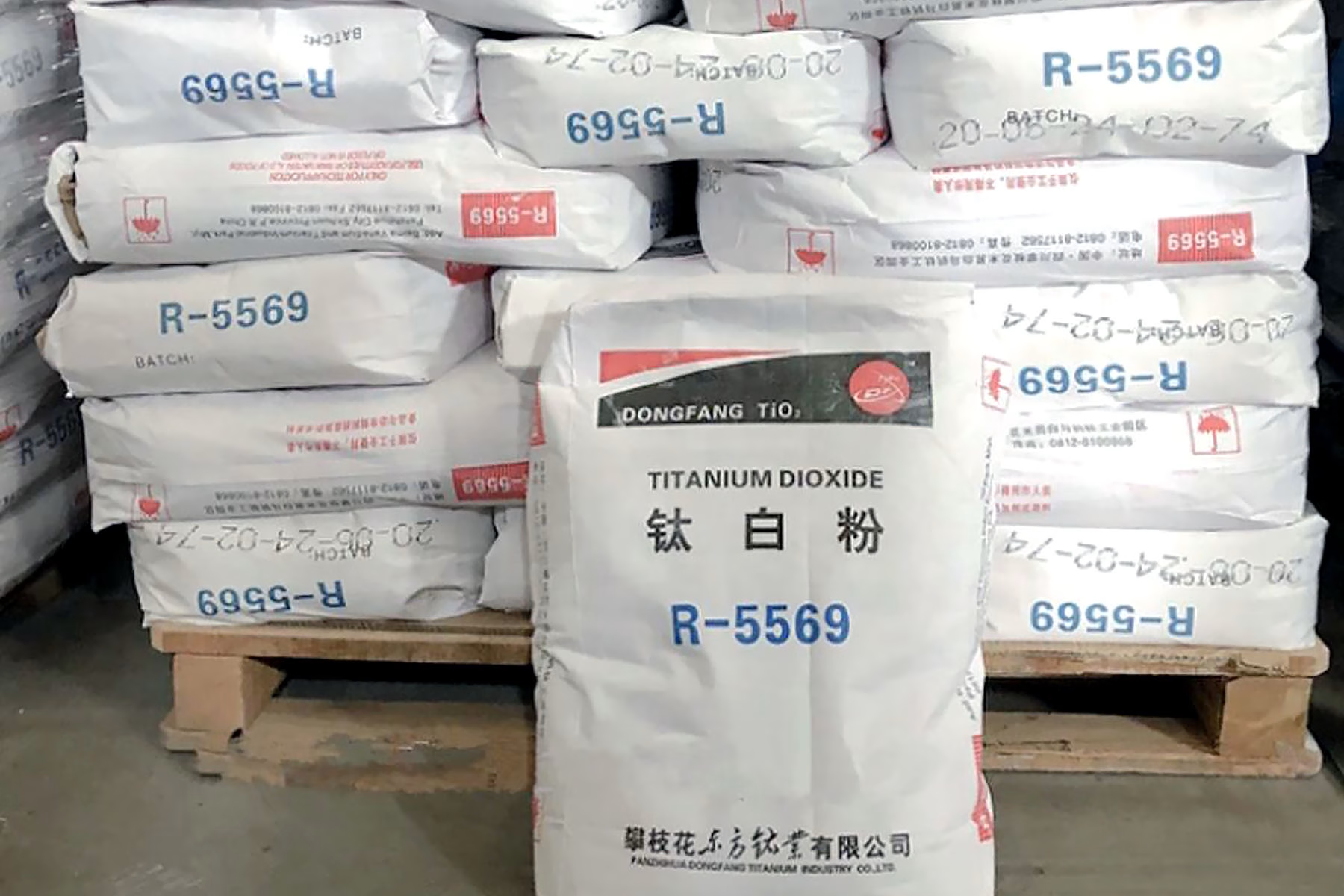
| E171 | Titanium Dioxide | Colour (White), Opacifier | None (EFSA could not establish safe level) | EU: banned in food (2022); US: permitted ≤1% by weight | EFSA 2021 could not rule out genotoxicity (nanoparticle fraction); EU food ban from 2022; US still permits. | Formerly gum, candies, icings | Divergent positions globally; banned in EU food since 2022. | Cell co-culture/animal data indicate barrier and microbiota changes; human data limited; precautionary ban in EU. | |
| E172 | Iron oxides and hydroxides | Colour (Red/Yellow/Black) | No numerical ADI | Permitted for certain uses | Generally regarded as low concern | Decorative coatings, casings | No clear human evidence of microbiome impact identified; data limited. Primary safety assessments focus on other endpoints. | ||
| E173 | Aluminium | Colour (silver) | No ADI (limited uses) | Permitted for surface decoration only | Aluminium exposure considerations | Cake decorations | No microbiome evidence. | ||
| E174 | Silver | Colour (silver) | No ADI (surface only) | Permitted for surface decoration only | Argyria risk with misuse (non-food) | Cake decorations | No microbiome evidence. | ||
| E175 | Gold | Colour (gold) | No ADI (surface only) | Permitted for surface decoration only | Inert at dietary levels | Chocolate, liqueurs | No microbiome evidence. | ||
| E180 | Litholrubine BK | Colour (Red) | EFSA 1.5 | Permitted (rind of certain cheeses only) | Use restricted to cheese rind | Edam rind | No microbiome evidence. | ||
| E200 | Sorbic acid & sorbates | Preservative (anti‑fungal) | EFSA group 25 | Permitted | Rare skin irritation | Wine, cheese, dried fruit, yogurts, baked goods | Antimicrobial preservatives can inhibit probiotic taxa and reduce SCFA output in vitro at higher concentrations; human evidence limited. Evidence: in vitro short study (sorbate class). | ||
| E201 | Sorbic acid & sorbates | Preservative (anti‑fungal) | EFSA group 25 | Permitted | Rare skin irritation | Wine, cheese, dried fruit, yogurts, baked goods | Antimicrobial preservatives can inhibit probiotic taxa and reduce SCFA output in vitro at higher concentrations; human evidence limited. Evidence: in vitro short study (sorbate class). | ||
| E202 | Sorbic acid & sorbates | Preservative (anti‑fungal) | EFSA group 25 | Permitted | Rare skin irritation | Wine, cheese, dried fruit, yogurts, baked goods | Antimicrobial preservatives can inhibit probiotic taxa and reduce SCFA output in vitro at higher concentrations; human evidence limited. Evidence: in vitro short study (sorbate class). | ||
| E203 | Sorbic acid & sorbates | Preservative (anti‑fungal) | EFSA group 25 | Permitted | Rare skin irritation | Wine, cheese, dried fruit, yogurts, baked goods | Antimicrobial preservatives can inhibit probiotic taxa and reduce SCFA output in vitro at higher concentrations; human evidence limited. Evidence: in vitro short study (sorbate class). | ||
| E210 | Benzoic acid & benzoates | Preservative (anti‑microbial) | EFSA group 5 | Permitted | Benzene formation possible in presence of ascorbic acid under heat/light; industry reformulated to control. | Carbonated drinks, pickles, juices, condiments | Ex vivo data show modest functional shifts at high doses; human data limited. | ||
| E211 | Benzoic acid & benzoates | Preservative (anti‑microbial) | EFSA group 5 | Permitted | Benzene formation risk with ascorbic acid under heat/light; controlled in modern products. | Carbonated drinks, pickles, juices, condiments | Limited human data. | ||
| E212 | Benzoic acid & benzoates | Preservative (anti‑microbial) | EFSA group 5 | Permitted | Benzene formation risk with ascorbic acid under heat/light; controlled in modern products. | Carbonated drinks, pickles, juices, condiments | Limited human data. | ||
| E213 | Benzoic acid & benzoates | Preservative (anti‑microbial) | EFSA group 5 | Permitted | Benzene formation risk with ascorbic acid under heat/light; controlled in modern products. | Carbonated drinks, pickles, juices, condiments | Limited human data. | ||
| E220 | Sulphur dioxide & sulphites | Preservative/Antioxidant/Bleach | EFSA 0.7 (as SO2) | Permitted with mandatory labeling >10 mg/kg | Sulfite sensitivity (asthma, headaches) in ~1% | Dried fruit, wine, processed potatoes | No clear human evidence of microbiome impact identified; data limited. Primary safety assessments focus on other endpoints. | ||
| E221 | Sulphur dioxide & sulphites | Preservative/Antioxidant/Bleach | EFSA 0.7 (as SO2) | Permitted with mandatory labeling >10 mg/kg | Sulfite sensitivity (asthma, headaches) in ~1% | Dried fruit, wine, processed potatoes | No clear human evidence of microbiome impact identified; data limited. Primary safety assessments focus on other endpoints. | ||
| E222 | Sulphur dioxide & sulphites | Preservative/Antioxidant/Bleach | EFSA 0.7 (as SO2) | Permitted with mandatory labeling >10 mg/kg | Sulfite sensitivity (asthma, headaches) in ~1% | Dried fruit, wine, processed potatoes | No clear human evidence of microbiome impact identified; data limited. Primary safety assessments focus on other endpoints. | ||
| E223 | Sulphur dioxide & sulphites | Preservative/Antioxidant/Bleach | EFSA 0.7 (as SO2) | Permitted with mandatory labeling >10 mg/kg | Sulfite sensitivity (asthma, headaches) in ~1% | Dried fruit, wine, processed potatoes | No clear human evidence of microbiome impact identified; data limited. Primary safety assessments focus on other endpoints. | ||
| E224 | Sulphur dioxide & sulphites | Preservative/Antioxidant/Bleach | EFSA 0.7 (as SO2) | Permitted with mandatory labeling >10 mg/kg | Sulfite sensitivity (asthma, headaches) in ~1% | Dried fruit, wine, processed potatoes | No clear human evidence of microbiome impact identified; data limited. Primary safety assessments focus on other endpoints. | ||
| E225 | Sulphur dioxide & sulphites | Preservative/Antioxidant/Bleach | EFSA 0.7 (as SO2) | Permitted with mandatory labeling >10 mg/kg | Sulfite sensitivity (asthma, headaches) in ~1% | Dried fruit, wine, processed potatoes | No clear human evidence of microbiome impact identified; data limited. Primary safety assessments focus on other endpoints. | ||
| E226 | Sulphur dioxide & sulphites | Preservative/Antioxidant/Bleach | EFSA 0.7 (as SO2) | Permitted with mandatory labeling >10 mg/kg | Sulfite sensitivity (asthma, headaches) in ~1% | Dried fruit, wine, processed potatoes | No clear human evidence of microbiome impact identified; data limited. Primary safety assessments focus on other endpoints. | ||
| E227 | Sulphur dioxide & sulphites | Preservative/Antioxidant/Bleach | EFSA 0.7 (as SO2) | Permitted with mandatory labeling >10 mg/kg | Sulfite sensitivity (asthma, headaches) in ~1% | Dried fruit, wine, processed potatoes | No clear human evidence of microbiome impact identified; data limited. Primary safety assessments focus on other endpoints. | ||
| E228 | Sulphur dioxide & sulphites | Preservative/Antioxidant/Bleach | EFSA 0.7 (as SO2) | Permitted with mandatory labeling >10 mg/kg | Sulfite sensitivity (asthma, headaches) in ~1% | Dried fruit, wine, processed potatoes | No clear human evidence of microbiome impact identified; data limited. Primary safety assessments focus on other endpoints. | ||
| E234 | Nisin | Preservative (antimicrobial peptide) | EFSA ADI 1 mg/kg (2017) | Permitted for certain uses | Generally safe; peptide degraded in gut | Cheese, processed meats | Effective vs Listeria | Minimal microbiome impact; bacteriocin targeted. | |
| E235 | Natamycin | Preservative (antifungal) | JECFA 0-0.3; EFSA no ADI set (use-level based) | Surface use only (cheese/sausages) | Poorly absorbed; low concern | Cheese rind, sausage casings | Not for sprinkling; surface only | Limited microbiome interaction; surface application. | |
| E242 | Dimethyl dicarbonate | Preservative (microbial control) | No ADI (GMP) | Permitted in beverages | Hydrolyses to methanol & CO2; managed limits | Juices, teas, wines | No microbiome evidence. | ||
| E243 | Ethyl lauroyl arginate (LAE) | Preservative (antimicrobial) | EFSA 0.15 mg/kg | Permitted in specific foods | Cationic surfactant; safety margins set | Sauces, seafood glazing | Limited microbiome data. | ||
| E249 | Nitrites (K/Na) | Preservative, colour fixative | EFSA 0.07 (nitrite ion) | Strictly limited | Nitrosamine formation risk in processed meats; balancing anti-botulism benefits. | PLOS Med 2023 NutriNet-Santé: additives-origin nitrites, especially E250, linked to higher T2D risk; no association for nitrates. | Bacon, ham, sausages, cured meats | No clear human evidence of microbiome impact identified; data limited. Primary safety assessments focus on other endpoints. | |
| E250 | Nitrites (K/Na) | Preservative, colour fixative | EFSA 0.07 (nitrite ion) | Strictly limited | Same as E249. | PLOS Med 2023 NutriNet-Santé: sodium nitrite E250 associated with higher T2D risk. | Bacon, ham, sausages, cured meats | No clear human evidence of microbiome impact identified; data limited. Primary safety assessments focus on other endpoints. | |
| E251 | Nitrates (Na/K) | Preservative, colour fixative | EFSA 3.7 (nitrate ion) | Permitted | Convert to nitrite; similar concerns as E249–250 | PLOS Med 2023: no association for total nitrates with T2D; signals in other cancer outcomes discussed elsewhere. | Dry‑cured meats (salami, prosciutto) | No clear human evidence of microbiome impact identified; data limited. Primary safety assessments focus on other endpoints. | |
| E252 | Nitrates (Na/K) | Preservative, colour fixative | EFSA 3.7 (nitrate ion) | Permitted | Convert to nitrite; similar concerns as E249–250 | PLOS Med 2023: nitrates not associated with T2D in NutriNet-Santé; monitoring continues. | Dry‑cured meats (salami, prosciutto) | No clear human evidence of microbiome impact identified; data limited. Primary safety assessments focus on other endpoints. | |
| E260 | Acetic acid | Acidity regulator, preservative | No ADI | Permitted | Corrosive in concentrate | Pickles, condiments, mayonnaise | Vinegar | No clear human evidence of microbiome impact identified; data limited. Primary safety assessments focus on other endpoints. | |
| E270 | Lactic acid | Acidity regulator, preservative | No ADI | Permitted | Infant intolerance possible | Cheese, yogurt, olives, sourdough | No clear human evidence of microbiome impact identified; data limited. Primary safety assessments focus on other endpoints. | ||
| E280 | Propionic acid & propionates | Preservative (anti‑fungal) | No numerical ADI | Permitted | Mixed evidence on behavior/sleep in children | Bread, baked goods, tortillas, cheese | Produced naturally in gut/Swiss cheese | No clear human evidence of microbiome impact identified; data limited. Primary safety assessments focus on other endpoints. | |
| E281 | Propionic acid & propionates | Preservative (anti‑fungal) | No numerical ADI | Permitted | Mixed evidence on behavior/sleep in children | Bread, baked goods, tortillas, cheese | Produced naturally in gut/Swiss cheese | No clear human evidence of microbiome impact identified; data limited. Primary safety assessments focus on other endpoints. | |
| E282 | Propionic acid & propionates | Preservative (anti‑fungal) | No numerical ADI | Permitted | Mixed evidence on behavior/sleep in children | Bread, baked goods, tortillas, cheese | Produced naturally in gut/Swiss cheese | No clear human evidence of microbiome impact identified; data limited. Primary safety assessments focus on other endpoints. | |
| E283 | Propionic acid & propionates | Preservative (anti‑fungal) | No numerical ADI | Permitted | Mixed evidence on behavior/sleep in children | Bread, baked goods, tortillas, cheese | Produced naturally in gut/Swiss cheese | No clear human evidence of microbiome impact identified; data limited. Primary safety assessments focus on other endpoints. | |
| E296 | Malic acid | Acidity regulator | No ADI | Permitted | Irritating in concentrates | Candy, fruit drinks, frozen dairy desserts | No clear human evidence of microbiome impact identified; data limited. Primary safety assessments focus on other endpoints. | ||
| E300 | Ascorbic acid & ascorbates | Antioxidant, acidity regulator | No ADI (generally safe) | Permitted | Dental erosion in acidic drinks | Juices, bread, cured meats | No clear human evidence of microbiome impact identified; data limited. Primary safety assessments focus on other endpoints. | ||
| E301 | Ascorbic acid & ascorbates | Antioxidant, acidity regulator | No ADI (generally safe) | Permitted | Dental erosion in acidic drinks | Juices, bread, cured meats | No clear human evidence of microbiome impact identified; data limited. Primary safety assessments focus on other endpoints. | ||
| E302 | Ascorbic acid & ascorbates | Antioxidant, acidity regulator | No ADI (generally safe) | Permitted | Dental erosion in acidic drinks | Juices, bread, cured meats | No clear human evidence of microbiome impact identified; data limited. Primary safety assessments focus on other endpoints. | ||
| E303 | Potassium ascorbate | Antioxidant | No ADI | Permitted | Generally safe | Cured meats | No microbiome evidence. | ||
| E304 | Ascorbyl palmitate/stearate | Antioxidant | JECFA 0-1.25 (palmitate) | Permitted | Generally safe | Fats, oils, snacks | No microbiome evidence. | ||
| E305 | Ascorbyl stearate | Antioxidant | See E304 | Permitted | Generally safe | Fats, oils | No microbiome evidence. | ||
| E306 | Tocopherols (Vitamin E) | Antioxidant | EFSA: no ADI; JECFA: 0.15–2 (dl‑α‑tocopherol) | Permitted; ULs apply for supplements | High supplemental intakes can affect coagulation | Oils, margarine, cereals | Often from soy (allergen) | No clear human evidence of microbiome impact identified; data limited. Primary safety assessments focus on other endpoints. | |
| E307 | Tocopherols (Vitamin E) | Antioxidant | EFSA: no ADI; JECFA: 0.15–2 (dl‑α‑tocopherol) | Permitted; ULs apply for supplements | High supplemental intakes can affect coagulation | Oils, margarine, cereals | Often from soy (allergen) | No clear human evidence of microbiome impact identified; data limited. Primary safety assessments focus on other endpoints. | |
| E308 | Tocopherols (Vitamin E) | Antioxidant | EFSA: no ADI; JECFA: 0.15–2 (dl‑α‑tocopherol) | Permitted; ULs apply for supplements | High supplemental intakes can affect coagulation | Oils, margarine, cereals | Often from soy (allergen) | No clear human evidence of microbiome impact identified; data limited. Primary safety assessments focus on other endpoints. | |
| E309 | Tocopherols (Vitamin E) | Antioxidant | EFSA: no ADI; JECFA: 0.15–2 (dl‑α‑tocopherol) | Permitted; ULs apply for supplements | High supplemental intakes can affect coagulation | Oils, margarine, cereals | Often from soy (allergen) | No clear human evidence of microbiome impact identified; data limited. Primary safety assessments focus on other endpoints. | |
| E310 | Gallates (propyl/octyl/dodecyl) | Antioxidant | EFSA group 0.5 | Permitted | Endocrine/discussion; contact dermatitis | Chewing gum, snacks, oils, margarine, meats | No clear human evidence of microbiome impact identified; data limited. Primary safety assessments focus on other endpoints. | ||
| E311 | Gallates (propyl/octyl/dodecyl) | Antioxidant | EFSA group 0.5 | Permitted | Endocrine/discussion; contact dermatitis | Chewing gum, snacks, oils, margarine, meats | No clear human evidence of microbiome impact identified; data limited. Primary safety assessments focus on other endpoints. | ||
| E312 | Gallates (propyl/octyl/dodecyl) | Antioxidant | EFSA group 0.5 | Permitted | Endocrine/discussion; contact dermatitis | Chewing gum, snacks, oils, margarine, meats | No clear human evidence of microbiome impact identified; data limited. Primary safety assessments focus on other endpoints. | ||
| E316 | Sodium erythorbate | Antioxidant | No ADI | Permitted | High intake discussions (recent cohort signals) | Cured meats | Isomer of vitamin C | Limited microbiome evidence. | |
| E320 | BHA (Butylated hydroxyanisole) | Antioxidant | EFSA 1 | Permitted | Animal carcinogenicity at high dose; IARC 2B | Chips, gum, cereal, meats, beer | No clear human evidence of microbiome impact identified; data limited. Primary safety assessments focus on other endpoints. | ||
| E321 | BHT (Butylated hydroxytoluene) | Antioxidant | EFSA 0.25 | Permitted | High‑dose liver/kidney effects in animals | Similar to E320; packaging uses | No clear human evidence of microbiome impact identified; data limited. Primary safety assessments focus on other endpoints. | ||
| E322 | Lecithin | Emulsifier/antioxidant | No ADI | Permitted | Soy/egg allergenicity (source‑dependent) | Chocolate, margarine, bakery | Can be sunflower‑based | Low impact in ex vivo screen compared with synthetic emulsifiers; lecithin showed minimal effect on microbiota in model. Evidence: ex vivo emulsifier panel. | |
| E331 | Sodium citrate | Acidity regulator, emulsifier | No ADI | Permitted | Generally safe | Lancet Diabetes 2024: sodium citrate within emulsifier mixture associated with T2D risk; observational signal. | Processed cheese, soft drinks, powders | No clear human evidence of microbiome impact identified; data limited. Primary safety assessments focus on other endpoints. | |
| E338 | Phosphoric acid | Acidity regulator | EFSA group 40 (as phosphorus) | Permitted | Bone/dental erosion with high cola intake | Colas and soft drinks | No clear human evidence of microbiome impact identified; data limited. Primary safety assessments focus on other endpoints. | ||
| E339 | Phosphates (Na/K/Ca) | Acidity regulator, emulsifier | EFSA group 40 (as phosphorus) | Permitted | High phosphate load—CVD/bone risk esp. kidney disease | Processed meats, cheese, baked goods, sodas | No clear human evidence of microbiome impact identified; data limited. Primary safety assessments focus on other endpoints. | ||
| E340 | Phosphates (Na/K/Ca) | Acidity regulator, emulsifier | EFSA group 40 (as phosphorus) | Permitted | High phosphate load—CVD/bone risk esp. kidney disease | Processed meats, cheese, baked goods, sodas | No clear human evidence of microbiome impact identified; data limited. Primary safety assessments focus on other endpoints. | ||
| E341 | Phosphates (Na/K/Ca) | Acidity regulator, emulsifier | EFSA group 40 (as phosphorus) | Permitted | High phosphate load—CVD/bone risk esp. kidney disease | Processed meats, cheese, baked goods, sodas | No clear human evidence of microbiome impact identified; data limited. Primary safety assessments focus on other endpoints. | ||
| E407 | Carrageenan | Thickener/gelling agent | EFSA temporary group ADI 75 (food‑grade, high MW) | Permitted | Debate around degraded forms; GI effects at high dose | Chocolate milk, ice cream, yogurt, plant milks | Food‑grade ≠ degraded (poligeenan) | Mixed to disruptive: pro-inflammatory signalling in patient-derived intestinal monolayers and animals; permeability findings vary; caution in IBD. Evidence: ex vivo human tissue + animal + reviews (carrageenan). | |
| E410 | Locust bean gum | Thickener/stabilizer | No ADI | Permitted | Generally safe | Ice cream, sauces, cheese | Plant‑derived | No clear human evidence of microbiome impact identified; data limited. Primary safety assessments focus on other endpoints. | |
| E412 | Guar gum | Thickener/stabilizer | No ADI | Permitted | High doses can cause GI blockage | Lancet Diabetes 2024: higher T2D risk for higher intakes in cohort (emulsifier class) | Ice cream, sauces, soups | Plant‑derived | No clear human evidence of microbiome impact identified; data limited. Primary safety assessments focus on other endpoints. |
| E415 | Xanthan gum | Thickener/stabilizer | No ADI | Permitted | Generally tolerated; very high intakes laxative. | Lancet Diabetes 2024: higher xanthan gum intake associated with higher T2D risk in cohort; observational. | Dressings, sauces, GF baking, ice cream | Fermentation product | Nature Microbiology 2022: selects for xanthan-degrading taxa and cross-feeding; indicative of adaptation rather than dysbiosis in healthy adults. |
| E420 | Sorbitol | Sweetener, humectant | No ADI (GMP) | Permitted | Laxative/bloating at high intakes | Sugar‑free gum, mints, cough syrups | ‘Excess consumption may cause laxative effect’ | No clear human evidence of microbiome impact identified; data limited. Primary safety assessments focus on other endpoints. | |
| E421 | Mannitol | Sweetener, anti‑caking | No ADI (GMP) | Permitted | Laxative at high intakes | Sugar‑free confectionery, gum | No clear human evidence of microbiome impact identified; data limited. Primary safety assessments focus on other endpoints. | ||
| E433 | Polysorbate 80 | Emulsifier | EFSA/JECFA group 25 | Permitted | Animal data suggest gut barrier/mucus disruption at high doses; observational link with higher CVD risk for emulsifier group. | BMJ 2023 NutriNet-Santé: celluloses and mono/diglycerides groups linked to higher CVD risk; emulsifier mixtures implicated. | Ice cream, dressings, cake mixes | Prefer products minimizing synthetic emulsifiers if sensitive. | Ex vivo human microbiota + mouse studies show increased pro-inflammatory potential and mucus penetration with polysorbate 80. |
| E450 | Diphosphates/Triphosphates/Polyphosphates | Emulsifier/stabilizer/moisture retainer | EFSA group 40 (as phosphorus) | Permitted | Same as other phosphates | Processed meats, cheese, canned fish, potatoes | No clear human evidence of microbiome impact identified; data limited. Primary safety assessments focus on other endpoints. | ||
| E451 | Diphosphates/Triphosphates/Polyphosphates | Emulsifier/stabilizer/moisture retainer | EFSA group 40 (as phosphorus) | Permitted | Same as other phosphates | Processed meats, cheese, canned fish, potatoes | No clear human evidence of microbiome impact identified; data limited. Primary safety assessments focus on other endpoints. | ||
| E452 | Diphosphates/Triphosphates/Polyphosphates | Emulsifier/stabilizer/moisture retainer | EFSA group 40 (as phosphorus) | Permitted | Same as other phosphates | Processed meats, cheese, canned fish, potatoes | No clear human evidence of microbiome impact identified; data limited. Primary safety assessments focus on other endpoints. | ||
| E466 | Carboxymethylcellulose (CMC) | Thickener/stabilizer | EFSA: no ADI; JECFA group ADI ‘not specified’ (modified celluloses) | Permitted (infant special medical foods use restricted in EU) | Pilot human RCT: 11 days of CMC increased postprandial abdominal discomfort and reduced microbiota diversity; regulatory specs tightened for infant foods. | BMJ 2023; Lancet Diabetes 2024: higher emulsifier exposures associated with CVD/T2D in NutriNet-Santé. | Ice cream, processed cheese, diet foods | EU tightened specs; infant use restrictions | Human RCT + ex vivo models show altered microbiota composition/function and reduced SCFAs; animal studies show mucus encroachment. |
| E471 | Mono‑ & diglycerides of fatty acids | Emulsifier | No ADI | Permitted | Trans‑fat trace contamination possible (source‑dependent) | BMJ 2023: higher CVD risk with this emulsifier group | Bread, margarine, cakes, coffee whiteners | Source varies (soy, palm, animal fat) | Limited direct microbiome data; general emulsifier concerns centre on CMC/P80; observational CVD associations exist but not microbiome-specific. Evidence: observational (non-microbiome). |
| E621 | Monosodium glutamate (MSG) | Flavour enhancer | EFSA group ADI 30 (glutamates, as glutamic acid) | Permitted (GRAS in US) | Subset sensitivity (headache/flush) reported; EFSA set ADI for glutamates group (30 mg/kg bw/day). | Snacks, instant noodles, soups, stock cubes | EFSA recommended reviewing maximum levels | No robust human evidence for microbiome disruption at typical intakes; primary concerns are sensitivity in subset. | |
| E901 | Beeswax | Glazing agent | No ADI | Permitted | Allergy in those allergic to bee products | Coating for fruit, confectionery, chewing gum | Animal‑derived; not vegan | No clear human evidence of microbiome impact identified; data limited. Primary safety assessments focus on other endpoints. | |
| E903 | Carnauba wax | Glazing agent | No ADI | Permitted | Generally safe | Coating for candies, pills, fruit | Plant‑derived | No clear human evidence of microbiome impact identified; data limited. Primary safety assessments focus on other endpoints. | |
| E920 | L‑Cysteine | Flour treatment | No ADI | Permitted | Ethical/religious sourcing concerns | Commercial bread, pizza dough | Historically derived from hair/feathers; synthetic sources exist | No clear human evidence of microbiome impact identified; data limited. Primary safety assessments focus on other endpoints. | |
| E941 | Nitrogen | Packaging gas | No ADI | Permitted | None (inert) | Packaged snacks (chips, nuts) | No clear human evidence of microbiome impact identified; data limited. Primary safety assessments focus on other endpoints. | ||
| E948 | Oxygen | Packaging gas | No ADI | Permitted | Supports combustion | Modified‑atmosphere fresh meat | No clear human evidence of microbiome impact identified; data limited. Primary safety assessments focus on other endpoints. | ||
| E950 | Acesulfame K | Sweetener | EFSA 9 | Permitted | Ongoing debate on microbiome/metabolic effects | BMJ 2022: higher acesulfame-K intake associated with higher CVD risk in NutriNet-Santé cohort. | Diet drinks, protein shakes, desserts | Animal and ex vivo studies indicate possible dysbiosis; human effects appear person-specific. | |
| E951 | Aspartame | Sweetener | EFSA/JECFA 40 (EU); FDA 50 | Permitted; IARC 2023: Group 2B ‘possibly carcinogenic’ | IARC 2023: possibly carcinogenic (2B); global regulators maintain ADIs; PKU contraindication. | BMJ 2022: artificial sweeteners (including aspartame) associated with higher CVD risk; cerebrovascular signal. | Diet soft drinks, gum, ‘light’ yogurt | Regulators retain ADI; PKU warning required | Human RCTs suggest person-specific microbiome-mediated glycaemic responses to NNS (see sucralose/saccharin studies). |
| E954 | Saccharin | Sweetener | EFSA 5 | Permitted | Historic rat bladder cancer not applicable to humans | Tabletop sweeteners, diet foods, toothpaste | Person-specific effects: in human RCT, saccharin altered microbiome and impaired glycaemia in a subset; effects transferable to mice. Evidence: human RCT. | ||
| E955 | Sucralose | Sweetener | EFSA 15 | Permitted | Emerging high‑dose microbiome/insulin signals | BMJ 2022: sucralose intake associated with CHD signal; observational. | Baked goods, drinks, tabletop | Human RCT (Cell 2022) showed microbiome-dependent glycaemic effects in some participants. | |
| E960 | Steviol glycosides (Stevia) | Sweetener | EFSA 4 (as steviol) | Permitted | Generally low concern | Soft drinks, yogurt, tabletop | Often blended with erythritol (E968) | Neutral in 12-week human RCT in healthy adults (no significant alpha/beta diversity or SCFA changes). Evidence: human RCT (stevia). | |
| E961 | Neotame | Sweetener | EFSA 2 | Permitted | Less studied; considered safe at ADI | Baked goods, soft drinks, gum | No PKU warning needed | No clear human evidence of microbiome impact identified; data limited. Primary safety assessments focus on other endpoints. | |
| E965 | Maltitol | Sweetener, bulking | No ADI (GMP) | Permitted | Gas/bloating; laxative at high intakes | Sugar‑free chocolate, ice cream, baked goods | No clear human evidence of microbiome impact identified; data limited. Primary safety assessments focus on other endpoints. | ||
| E967 | Xylitol | Sweetener | No ADI (GMP) | Permitted | Laxative at high doses; extremely toxic to dogs | Sugar‑free gum, mints, oral care | Serious pet hazard | No clear human evidence of microbiome impact identified; data limited. Primary safety assessments focus on other endpoints. |
Definition: The estimated amount of an additive (mg per kg of body weight per day) that can be consumed every day over a lifetime without appreciable health risk. ADIs are typically derived from a NOAEL (see below) with a large uncertainty factor (often ×100) to protect all consumers, including vulnerable groups.
Practical note: Exceeding the ADI on a single day is not automatically harmful; habitual intake above the ADI is not advised.
Example: An ADI of 10 mg/kg bw/day equates to 700 mg/day for a 70 kg adult.
Definition: A substance that can trigger an immune response in sensitive individuals, ranging from mild (hives, itching) to severe (anaphylaxis).
In this table: Some additives (e.g., certain azo dyes, sulphites) can provoke allergic‑type reactions or intolerances in a subset of people. Source‑derived allergens also matter (e.g., soy lecithin vs sunflower lecithin).
Added to powders or crystals (e.g., salt, icing sugar) to keep particles free‑flowing and prevent lumps.
Prevents or slows oxidation (e.g., rancidity in fats, browning of fruit), improving shelf life.
Examples: Ascorbic acid (E300), tocopherols/Vitamin E (E306–309).
Any agent that can cause cancer. Bodies such as IARC classify hazards (Group 1 = carcinogenic; 2A = probably; 2B = possibly). Classification is hazard identification, not the real‑world risk at typical dietary exposure (see Risk vs Hazard).
Helps mix oil and water, creating a stable emulsion and smoother texture.
Examples: Lecithin (E322); mono‑ & diglycerides (E471).
Microbiome note: Some synthetic emulsifiers (e.g., CMC, polysorbate‑80) show mechanistic signals of mucus disruption and pro‑inflammatory microbiota in models; effects in humans are still being clarified.
EU agency that performs risk assessments on food additives, sets/reviews ADIs, and issues opinions that underpin EU food law (e.g., re‑evaluations of E‑numbers).
US agency overseeing food safety. Approves additives and maintains the GRAS framework (see below).
US designation indicating expert consensus that a substance is safe for intended food uses. GRAS may be based on long‑standing use (pre‑1958) or modern scientific evidence. It is not the same as an EFSA ADI.
The ability of a substance to damage DNA, potentially leading to mutations and cancer.
Regulatory example: The EU banned Titanium Dioxide (E171) in foods due to unresolved genotoxicity concerns.
Applied to a food’s surface for shine or protection.
Examples: Beeswax (E901) on fruit; carnauba wax (E903) on confectionery.
Helps retain moisture so products stay soft.
Examples: Glycerol (E422) in icings; sorbitol (E420) in soft cakes.
WHO agency that identifies hazards from published evidence (e.g., classifying a substance as Group 2B “possibly carcinogenic”). It does not estimate risk at typical intake — that’s done via risk assessment by bodies like EFSA or FDA.
Replaces the air in a package with a protective gas mix (e.g., nitrogen E941, carbon dioxide) to slow spoilage and extend shelf life (e.g., crisps, salads, fresh meat).
An inherited condition where phenylalanine cannot be metabolized. People with PKU must avoid aspartame (E951), which contains phenylalanine; products must carry a PKU warning.
Prevents or slows spoilage by microbes or oxidation, improving safety and shelf life.
Examples: Sulphites (E220–228) in wine; sorbic acid (E200) in cheese.
Helps maintain structure/texture and prevents phase separation; often used alongside emulsifiers and thickeners.
Examples: Carrageenan (E407) in ice cream; guar gum (E412) in sauces.
Increases viscosity without changing other properties.
Examples: Xanthan gum (E415) in dressings; pectin (E440) in jams.
An imbalance in gut microbial communities (loss of diversity, expansion of pro‑inflammatory taxa, or erosion of beneficial functions).
Microbial fermentation products (e.g., acetate, propionate, butyrate) that help maintain gut barrier integrity, modulate immunity, and influence metabolism.
The gut’s mucus layer and epithelial tight junctions protect against microbial translocation. Some additives (particularly certain emulsifiers) show model‑based effects on mucus thickness or barrier integrity.
LPS (from Gram‑negative bacteria) and flagellin (bacterial motility protein) can activate immune pathways; elevated bioactive levels in models may indicate a more pro‑inflammatory microbiota profile.
A code used in the EU/UK for approved food additives (e.g., E415). Many correspond to global names; approval status may differ by region (EU vs US).
The highest tested dose at which no adverse effects are observed in toxicology studies. ADIs are typically set by applying uncertainty factors (e.g., ×100) to the NOAEL.
A margin (often ×100) applied when deriving an ADI to cover inter‑species differences (animal → human) and human variability (sensitive groups).
This website does not provide nutritional or medical advice, diagnostics, or treatments. The information including text and images within it are designed for entertainment purposes only. Please consult a professional for advice, diagnosis or treatment in relation to subjects such as illness, injuries, health advice or nutrition. In an emergency call 999
0 Comments Leave a comment